
Rule of thumb: if the door opens and closes a handful of times a day for one family, it's residential; if it opens dozens of times a day for a business, it's commercial. That's the quick answer for settling a kitchen-table argument, but it's not the whole story, and the exceptions are where people get it wrong.
The Exceptions That Trip People Up
A detached workshop garage that doubles as a small business — say, a boat repair shop or a home-based contractor's storage — often needs a commercial-grade door even though it sits on residential property. On the flip side, plenty of small storefronts and strip-mall units run on doors that are basically residential-grade because the owner never upgraded. And oversized RV garages, increasingly common around here, sometimes need commercial door specs just to handle the size and wind-load requirements, even though the house attached to them is 100% residential.
So the real dividing line isn't the address. It's cycle count, construction, and what the door is engineered to survive.
What Actually Separates Them
Cycle Count
A residential door is built for roughly 1-3 cycles (open-close) per day. A commercial or warehouse door on a busy loading area can see 10-20+ cycles daily. That difference drives everything else — heavier-gauge steel, higher-cycle torsion springs, and beefier rollers and hinges that won't wear out in a year.
Opener Duty Cycle
Residential openers are built to run intermittently — open the door, pull in, done. Commercial openers are rated for continuous or heavy-duty use, often with higher horsepower and components designed to handle repeated starts and stops without overheating. Put a residential opener on a commercial door and you'll burn it out fast.
Construction and Wind Load
This matters a lot on the Gulf Coast. Larger commercial and warehouse doors have to be engineered to handle wind loads across a much bigger surface area, which means reinforced struts, heavier tracks, and sometimes wind-locks that residential doors simply don't need. Hurricane season doesn't care whether the building is a house or a warehouse, but the bigger the door, the more engineering it takes to keep it from flexing or blowing in during a storm.
Insulation and Sealing
Residential doors are usually insulated for comfort and energy efficiency in the attached garage. Commercial doors are insulated (or not) based on what's stored inside — climate-controlled inventory versus a dry-storage warehouse have very different needs. Either way, humidity here means seals matter: a bad bottom seal lets in moisture, pests, and salt air, and that adds up over a season of afternoon downpours.
Maintenance Needs Differently
Because commercial doors work so much harder, they need attention more often:
- Lubrication: Residential doors typically need lubrication every few months. High-cycle commercial doors often need it monthly to keep rollers and hinges from grinding themselves down.
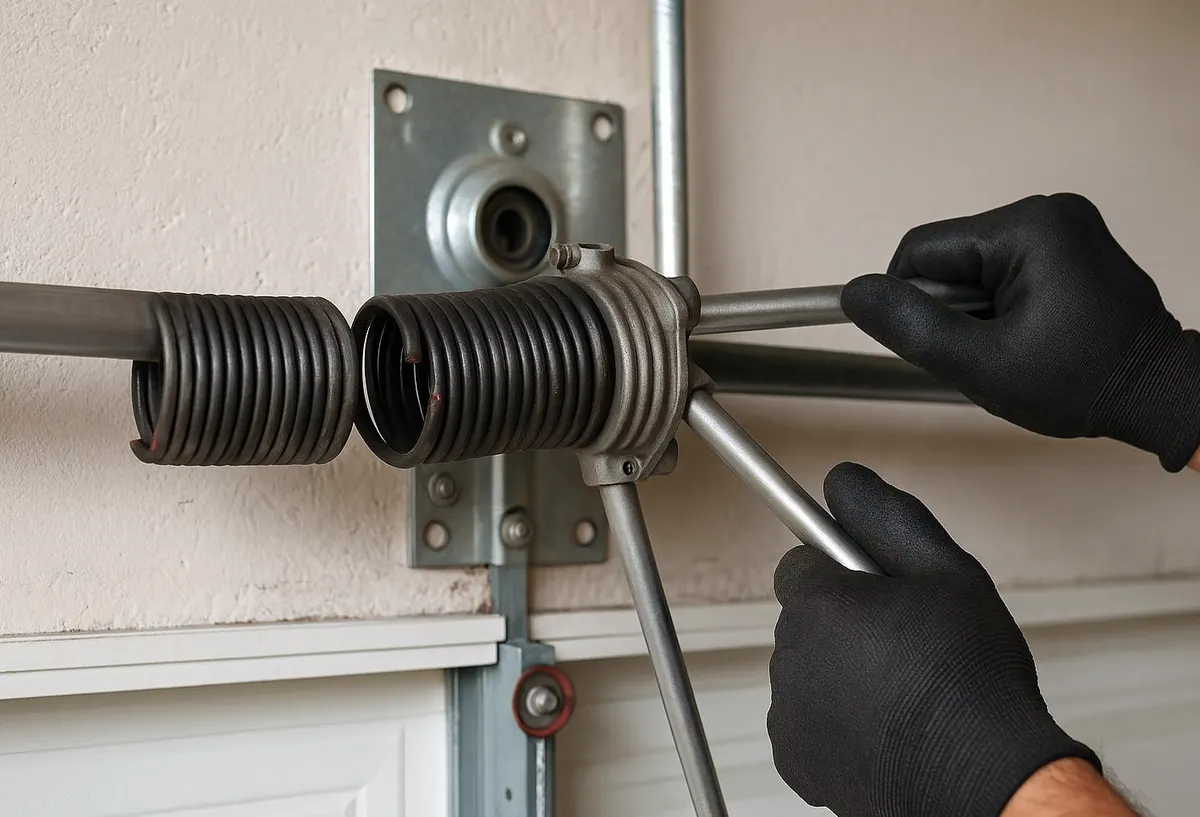
- Spring and cable inspection: Torsion springs on a commercial door wear out faster simply from repeated use, and a snapped spring on a large, heavy door is a bigger safety risk than on a standard residential one.
- Track and panel checks: Coastal salt air speeds up rust on hardware regardless of door type, but it shows up faster on frequently-used commercial tracks and bearings because they're exposed to the air (and the moisture) more often.
- Opener servicing: Heavy-duty openers need regular checks on gear sets and belts since they're doing so much more work over the same stretch of time.
A residential door that's barely used can often go six months to a year between real tune-ups. A commercial door earning its keep every day usually needs a maintenance check every few months to catch wear before it becomes a breakdown.
When to Call Englewood Garage Door Experts
If you're not sure whether your door — garage, workshop, or small business overhead door — is matched to how hard it actually works, that's worth a second opinion before storm season tests it for you. We handle both ends of this: a straightforward Garage Door Tune-Up & Maintenance visit for a residential door that's starting to squeak or stick, and full Garage Door Installation & Replacement for anyone upgrading to a heavier-duty door because their current one is outmatched by how often it's used or how much wind it has to withstand.
If your door in Englewood, North Port, Venice, Port Charlotte, Rotonda West, Nokomis, Osprey, or Punta Gorda is working harder than it was built for, give us a call — we'll tell you straight whether it needs a tune-up or a real upgrade.